The Building Engineer Who Never Clocks Out: What 24/7 Agentic AI Actually Looks Like
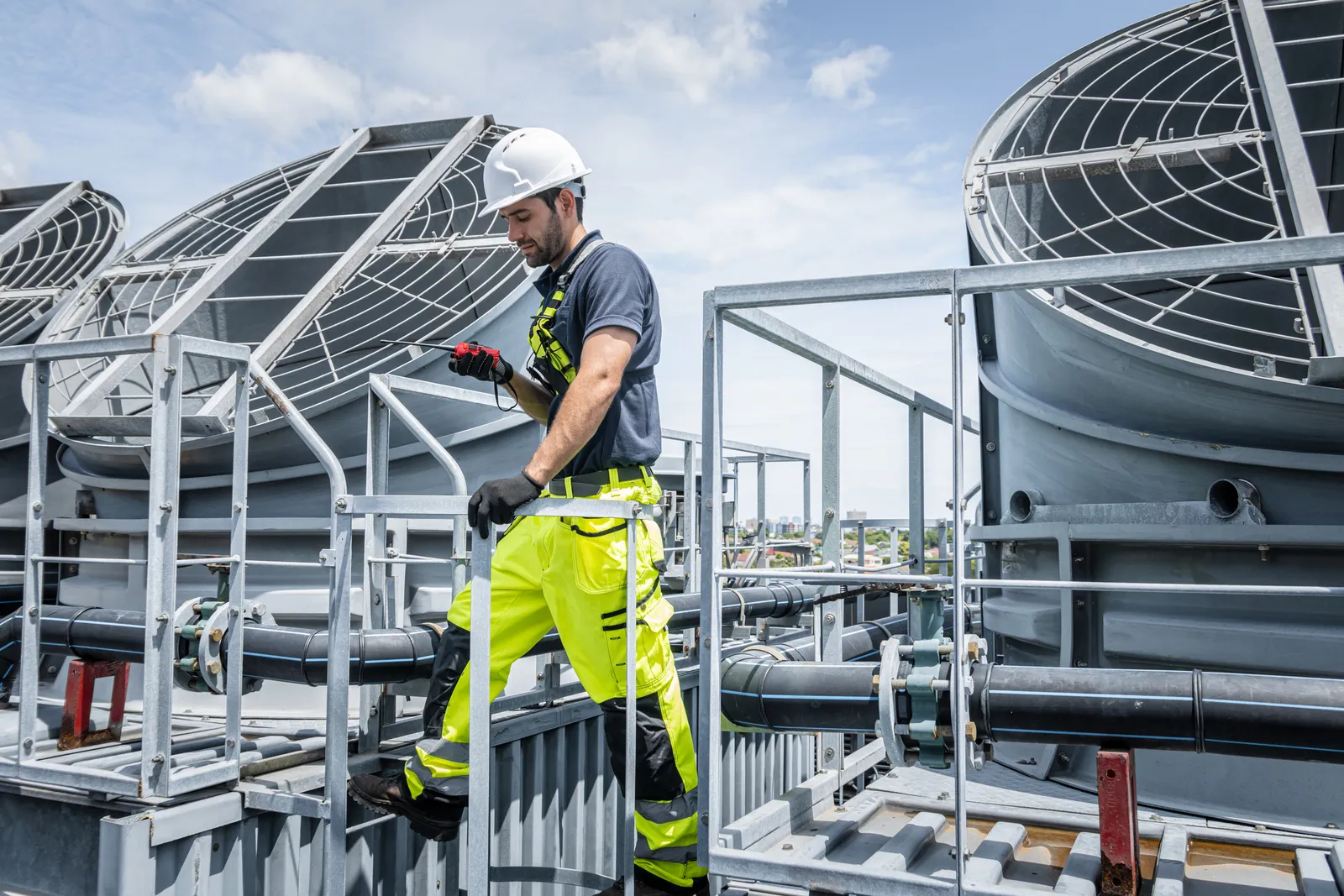
The best building engineers in commercial real estate share a common trait: they're always thinking about the building, even when they're not in it. They wake up wondering if the overnight setback is holding. They mentally flag the AHU that's been cycling too frequently. They carry the building with them.
For most of the industry's history, that's been as close to continuous oversight as was practically achievable. One engineer for multiple buildings, with a finite number of hours in the work day.
The advent of agentic AI changes that longstanding equation – not by replacing staff on the ground, but by becoming a true support mechanism for that dedicated engineer that genuinely never stops.
What Does "24/7 AI Building Operations" Actually Mean?
The phrase "always-on AI" gets used loosely in commercial real estate technology. It's worth being precise about what it means in practice.
In the context of building operations, always-on AI means a system that is continuously ingesting data from building systems — HVAC, electrical, BMS, sensors — analyzing it in real time, and taking action or surfacing the right information to the right person, without waiting to be asked.
The difference from traditional building management systems is fundamental. A BMS holds setpoints and executes sequences, but doesn't apply reasoning to determine whether those sequences are still appropriate given changing occupancy, weather, or equipment behavior. An agentic AI system can and does.
Concretely, this means:
- Fault detection that runs continuously, not just during quarterly recommissioning visits. When an issue occurs (like equipment cycling, for example), the system identifies it within hours, not weeks.
- Work order generation that happens automatically, with root cause analysis and resolution steps already attached, so the engineer reviews a clear diagnosis and action plan rather than starting from scratch.
- Energy waste that gets found in real time, not discovered long after the fact on an unexpectedly high utility bill.
Why This Matters More Than Any Dashboard
The real estate industry has spent the last decade investing in building analytics platforms. Most of them produce charts and dashboards. Dashboards are useful, but they're fundamentally passive — they wait for someone to look at them, and require human analysis and interpretation for the right corrective actions to be identified and ultimately taken.
And therein lies the crux of the matter: the gap between "we have a dashboard" and "AI is actively running our operations" is the gap between information and action. A dashboard tells an engineer what happened, but an agentic AI system handles what should happen, routes what needs a human decision, and keeps a continuous record of both.
Consider what this looks like on a typical overnight period — when most office buildings are nominally in setback mode but often behaving inconsistently:
- A boiler has been short-cycling every 12 minutes since 2am — a pattern that wouldn't register on a dashboard but signals a likely control valve or aquastat issue. The system correlates it with a gradual drop in supply water temperature, generates a work order with the diagnosis, and flags it for the morning shift before tenant complaints start rolling in.
- Lighting on floors 8 through 12 has been running until 11pm on weeknights, two hours past the scheduled 9pm sweep, for the past three weeks. The system isolates the override to a specific scheduling group, quantifies the recoverable energy cost, and surfaces it as a schedule correction for the property manager to review alongside any tenant after-hours requests that might explain it.
- A chilled water pump is drawing 8% more amperage than its twin under identical load conditions — a subtle divergence that's been trending for two weeks. The system flags probable bearing wear, pulls the maintenance history, and recommends scheduling service before failure forces an emergency call-out.
None of these required a human to be awake. All of them would have persisted, accumulating cost and wear, in a dashboard-only environment.
What AI Handles — and What Still Needs You
A useful way to think about AI in building operations is the distinction between steps and thoughts — a framework McKinsey has applied to agentic AI across industries.
Steps are repeatable, pattern-based tasks that benefit from consistency and speed: monitoring sensor data, identifying fault signatures, adjusting setpoints within defined parameters, generating work orders, normalizing energy consumption against weather. These are exactly where AI operates with highest reliability and highest leverage.
Thoughts, on the other hand, are judgment calls: decisions that carry context, relationships, financial risk, and/or regulatory weight, and therefore which no automated system should be making unilaterally. These include things like deciding whether to push back a capital replacement given budget constraints, navigating a tenant comfort escalation, approving an exception to standard sequences, and evaluating a vendor proposal.
The practical implication is that the engineering teams getting the most value from agentic AI aren't the ones asking "what can AI replace?” but instead "which steps can we get off our plates entirely, so we can spend more time on the work that actually requires us?"
For a lean engineering team managing multiple buildings, this is the true value proposition: automation not as a threat to headcount, but rather as a force multiplier for overworked staff, which makes a small team capable of managing a portfolio that would otherwise exceed their capacity.
What "Always On" Changes About Energy Performance
Energy management is one of the first places where the compounding effect of continuous AI oversight becomes most measurable.
Most building energy waste doesn't come from a single dramatic failure. It accumulates through persistent, low-level inefficiencies, like a scheduling drift that runs equipment 90 minutes longer than needed, or a sensor offset that causes a system to overcool by two degrees all summer.
These inefficiencies can be invisible to periodic reviews. They may show up (slightly) in monthly utility bills, but they're nearly impossible to trace back to root causes without the kind of continuous monitoring and reasoning that is made possible by AI.
Agentic AI finds them because it's looking all the time and has the computational horsepower to crunch enormous amounts of data very quickly. The result is energy savings that compound, rather than death by a thousand cuts; each fault resolved, each sequence optimized, and each setpoint corrected will contribute to a building (and portfolio) that continuously runs closer to its designed intent and operational potential rather than drifting away from it (and costing money, staff time, energy and carbon in the process).
Independent research supports this. A 2025 meta-analysis published in Energy Informatics found average energy savings from AI ranging from 14% to 28% depending on the methods applied. The upper range reflects multi-system, continuously-optimized deployments — the kind of environment that agentic AI makes possible at scale.
The Building Engineer's Role in an AI-First Operation
The shift to continuous AI operations naturally raises questions about what changes for the engineers and operators who run these buildings day to day. In practice, the most immediate change is in how their time gets distributed. Routine monitoring, fault pattern recognition, and energy reporting — tasks that are manual and time-consuming but not particularly judgment-intensive — move to the background. What remains is the work that genuinely benefits from a skilled engineer's attention, like complex troubleshooting that doesn't fit a standard fault signature, tenant relationships, and decisions about equipment sequencing, capital planning, and exceptions that require context which no automated system can fully hold.
For many engineers, that rebalancing can be a welcome one. The overnight fault is already diagnosed by the time they arrive, the recurring issues they've been meaning to investigate have been triaged, and the seasonal energy review is done.
It's also worth noting the broader context, which is that experienced building engineers are increasingly difficult to hire and retain, and most lean operations teams are already stretched across more buildings than is comfortable. AI that runs continuously doesn't resolve that structural challenge entirely, but it does change what's possible within it, by giving smaller and less-resourced teams the coverage and consistency that would otherwise require significantly more headcount.
Getting There: What Continuous AI Operations Requires
For operators considering this shift, the infrastructure requirements are worth understanding clearly.
The first prerequisite is data quality and connectivity. An AI system that can act on building data in real time is only as good as the data it receives. Inconsistent point naming across BMS vendors, data coverage gaps, and the absence of a normalized data model will limit what any AI platform can do, regardless of how sophisticated the algorithms are.
The second requirement is defined operational boundaries. Agentic AI needs clear parameters for what it can act on, what it should surface, and what it should escalate immediately. These aren't constraints that limit the system's value, but rather critical definitions that make AI trustworthy enough to run continuously.
The third is the organizational readiness to actually use what the system surfaces. AI that generates work orders no one acts on won’t deliver value. The operational benefit requires that the human side of the workflow is structured to receive and respond to high-quality AI outputs efficiently.
For portfolios that have done this foundational work, the shift to continuous AI operations is both a transformation and natural extension: the same operational goals, but executed at a speed and consistency that no manual process can match.
Interested in what 24/7 agentic AI looks like for your portfolio? Request a demo.